Choose for the actual place
Observe light, wind and available space before selecting plants. Check building rules and balcony load limits, since containers filled with wet growing medium can be heavy. Keep access and drainage clear, and never balance pots insecurely on a railing.
Start with a small number of containers. Choose correctly identified plants suited to the conditions, considering any children or animals in the household. Several impulsive purchases quickly create different care requirements. A coherent selection makes those needs easier to understand without immediately multiplying exceptions. Take measurements before shopping so pots do not block the only comfortable route through the space.
Share the planting tasks
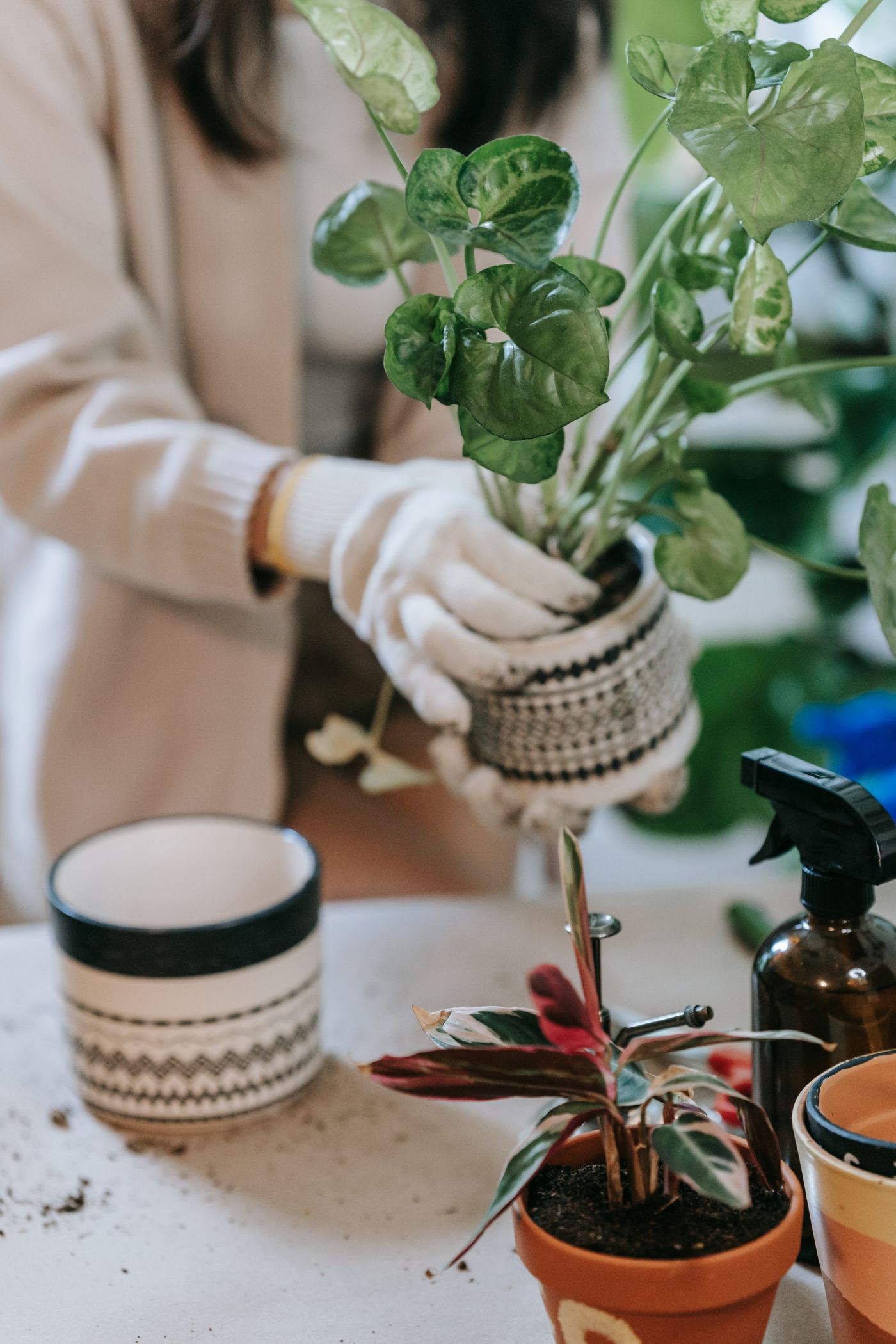
Prepare a surface to catch spilled soil, suitable containers with drainage and the necessary tools. Divide activities such as preparing pots, holding plants, adding growing medium and writing labels. Children can do age-appropriate tasks with supervision, without independently handling unsuitable products or tools.
Follow each plant's requirements for growing medium and depth. Avoid excessive compaction and do not leave roots exposed longer than necessary. Clean tools and hands afterwards. Collect spilled soil rather than pushing it into drainage openings or neighbouring areas. Keep labels readable so care information remains attached to the correct plant after pots are moved.
On a shared table, separate a dry area for labels from the area holding growing medium. This prevents wet notes and avoids passing a soil-covered tool into a task where it is not needed.
Avoid watering twice by accident
Agree who checks moisture and how that information is shared. Two people watering independently 'just in case' can provide too much water. A note of the last check may help, but it does not replace observing the growing medium and the plant's requirements.
Plan for absences too: who will move a pot if exposure changes, and who will provide care during a trip? Keep instructions specific and limited. If a plant struggles, investigate what changed together instead of immediately assigning blame. Shared gardening needs understandable decisions more than it needs everyone to perform exactly the same action every day.