Choose an image and a surface
Pick a puzzle whose finished dimensions fit the table with space around the edges. Piece count does not describe all the difficulty: large uniform areas may require more patience than a varied picture. For an occasional group, choose several recognisable areas so people can work without competing for the same pieces.
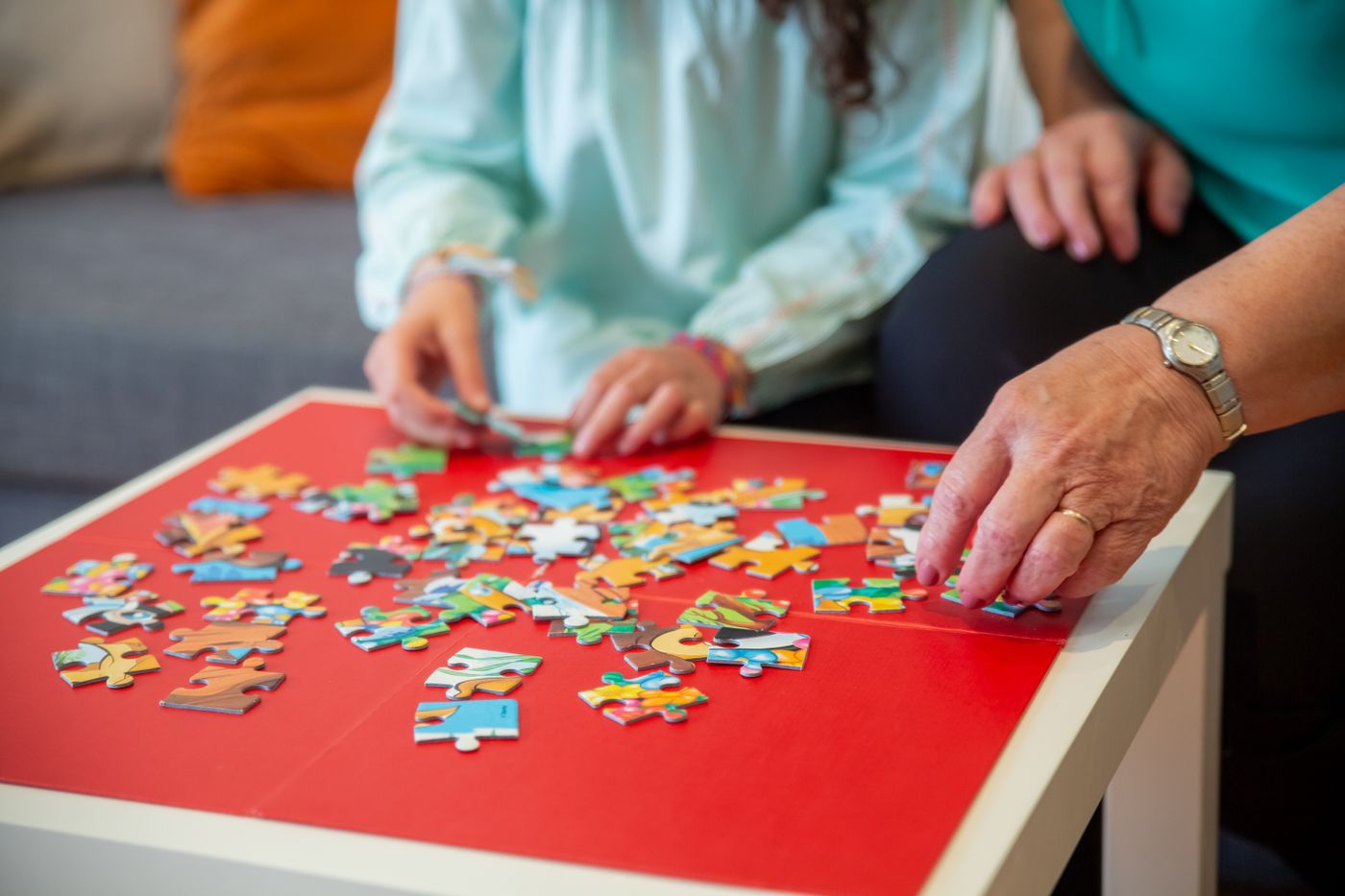
Check that the table can remain available, or use a suitable rigid support that can be moved flat. Keep drinks away and provide a few shallow trays for sorting. Even lighting helps everyone distinguish colours without needing to lean into the same small bright patch. Make sure seats are comfortable enough for the time you expect to spend.
Offer options rather than assignments
Turn pieces face up together, then suggest areas such as a building, pattern or colour. Each person can choose one and change later. Avoid deciding that someone less experienced should only sort. Sorting, assembling and hunting for a particular piece are activities everyone can alternate.
Keep small assembled sections visible in separate spaces. Ask before taking a piece from someone else's tray, or explain what you are seeking. Do not quietly remove a section another person started in order to finish it yourself. Shared progress does not require the fastest puzzler to direct every movement or correct every approach.
Stop at a suitable point
If a piece appears missing, first check beneath the table, inside packaging and among pieces still face down. Do not force a fit because the colours look close. Shapes should join without excessive pressure; one mistaken connection can disrupt a whole area.
The afternoon can end before the puzzle is complete. Photograph progress, store trays and agree what can remain in place. Dismantling everything is not a waste, because spending time together was part of the activity. Keep small pieces away from young children and animals, and inspect the floor before leaving. A note showing which tray belongs to each area will make restarting easier if you decide to continue another day.
Make room for different ways of taking part
Someone may need larger pieces, stronger contrast or a different sitting position. Before the session, look together at the image and actual piece size. A less complex puzzle can widen participation without removing interest for experienced puzzlers. They can choose another area or help organise pieces without taking over.
When returning to an unfinished puzzle, show completed and available areas. Leave somewhere a newcomer can begin immediately rather than offering only the hardest pieces because everything else has already been claimed. A different chair position may improve access, but warn people before moving the whole board while they are working. Keep the reference picture visible to more than one person, or use an authorised additional view if the box is difficult to share.