Make room for every kind of line
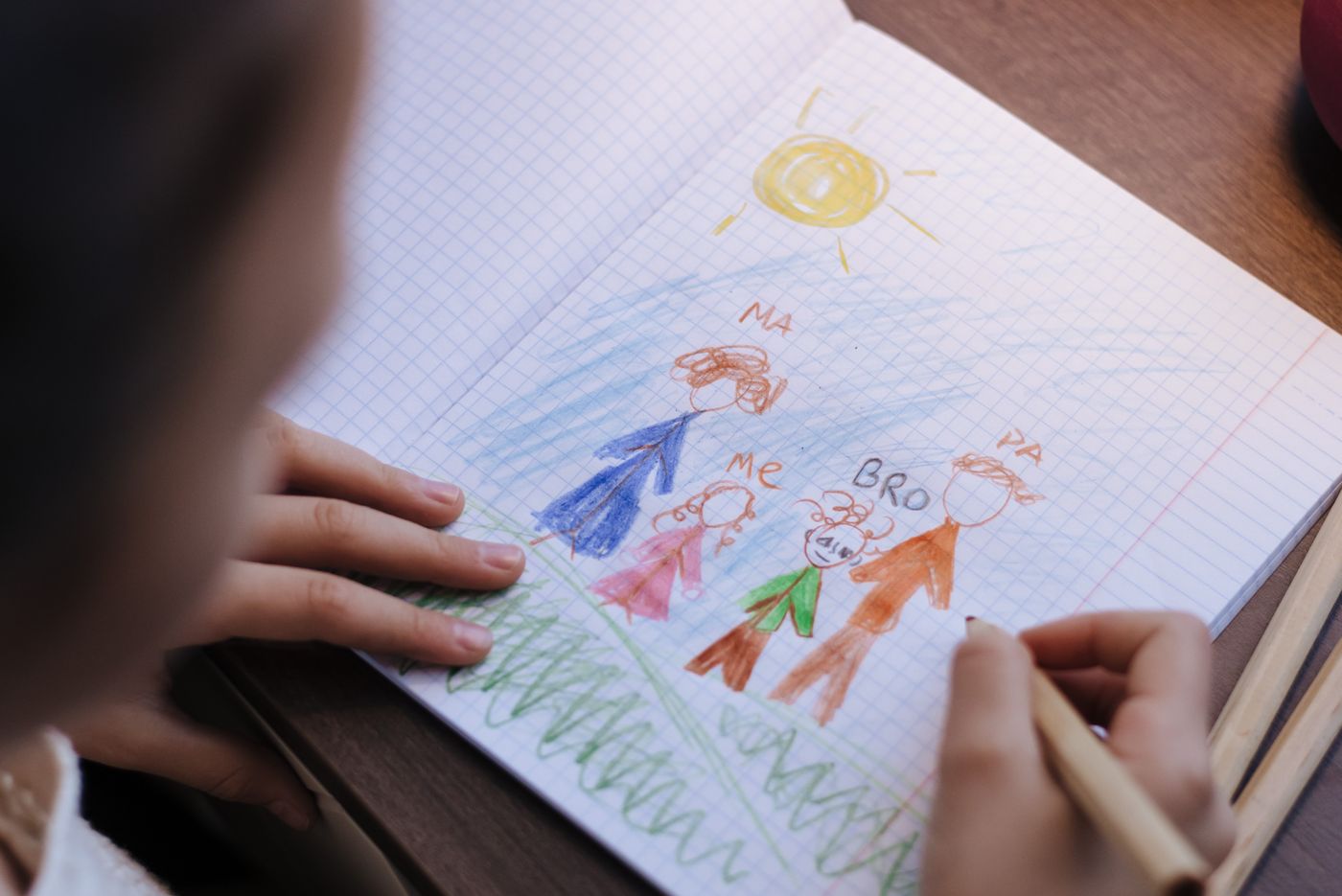
Set out one sheet per person, pencils that can be shared and a protected work surface. Choose tools suitable for participants' ages and keep small parts away from very young children. Each person begins with a simple shape: a curved line, circle or square. Nothing needs to be recognisable on the first turn.
Explain the rule beforehand: on each turn, add something without erasing previous work. The aim is not to guess the first person's intention or correct their perspective. A sheet might become a landscape, an imaginary machine or an abstract composition. Make this freedom explicit so nobody feels obliged to produce a polished picture.
Pass the pages without rushing
Choose a direction for passing and allow a flexible amount of time for each turn. A calm signal is enough; let someone finish a line if needed. Anyone who prefers not to draw can add a word, choose a colour or simply watch. They should not be required to contribute in another way to justify sitting with the group.
After several turns, pause to look at the changes. Instead of asking who drew best, notice something that changed meaning: a circle became a wheel and then a sun, or a line turned into a river. This gives people a way to discuss how ideas connect without ranking the participants.
Agree when the picture is finished
Stop when sheets become crowded or attention starts to fade. Choose a title together if you want, without requiring a complete story explaining every mark. Put the date and the names of people who want to be credited on the back.
Ask before photographing or sharing the results, especially when children take part. Display the sheets temporarily, divide them between participants or store them in a folder. If someone wants to preserve their initial drawing unchanged, offer a separate sheet for the relay. Joining a shared activity does not mean surrendering every choice about your own work.
Try a folded-window variation
For a variation, fold each sheet into three sections. The first person draws in the top part, leaving two small connecting marks in the next section, then hides their drawing. The second continues from those marks without seeing the whole image. The last person finishes the lower section before everyone unfolds the sheet. Explain where connecting marks belong before starting.
Results may be absurd, but laughter should concern the transformations rather than someone's drawing ability. If a participant dislikes completing something they cannot see, retain the open-page version. Two people can also share one sheet, alternating additions without a timer. Choose paper that folds easily and avoid pressing so hard that marks transfer through hidden sections. The format supports the meeting and can change whenever it makes participation less comfortable.