Choose the film beforehand
Offer two or three legally available titles suited to the people attending. Check duration, language, subtitles and accessibility needs. With children, investigate the content instead of judging only the poster. Spending an hour choosing can consume much of the evening before the film starts.
Test playback beforehand, including connection, account access, subtitles and volume. If using a projector, make sure its support is stable and ventilation remains clear. Keep cables out of walking routes and avoid overloaded improvised connections. An existing television may suit the gathering better than impressive equipment you cannot set up comfortably or safely.
Check that subtitles remain readable from the farthest seat. Text clear on a settings screen may disappear against a bright scene. Test a short passage and adjust available options. When several languages are needed, confirm that the chosen version offers the right tracks before the film begins rather than discovering the limitation with guests waiting.
Arrange seats for actual viewing
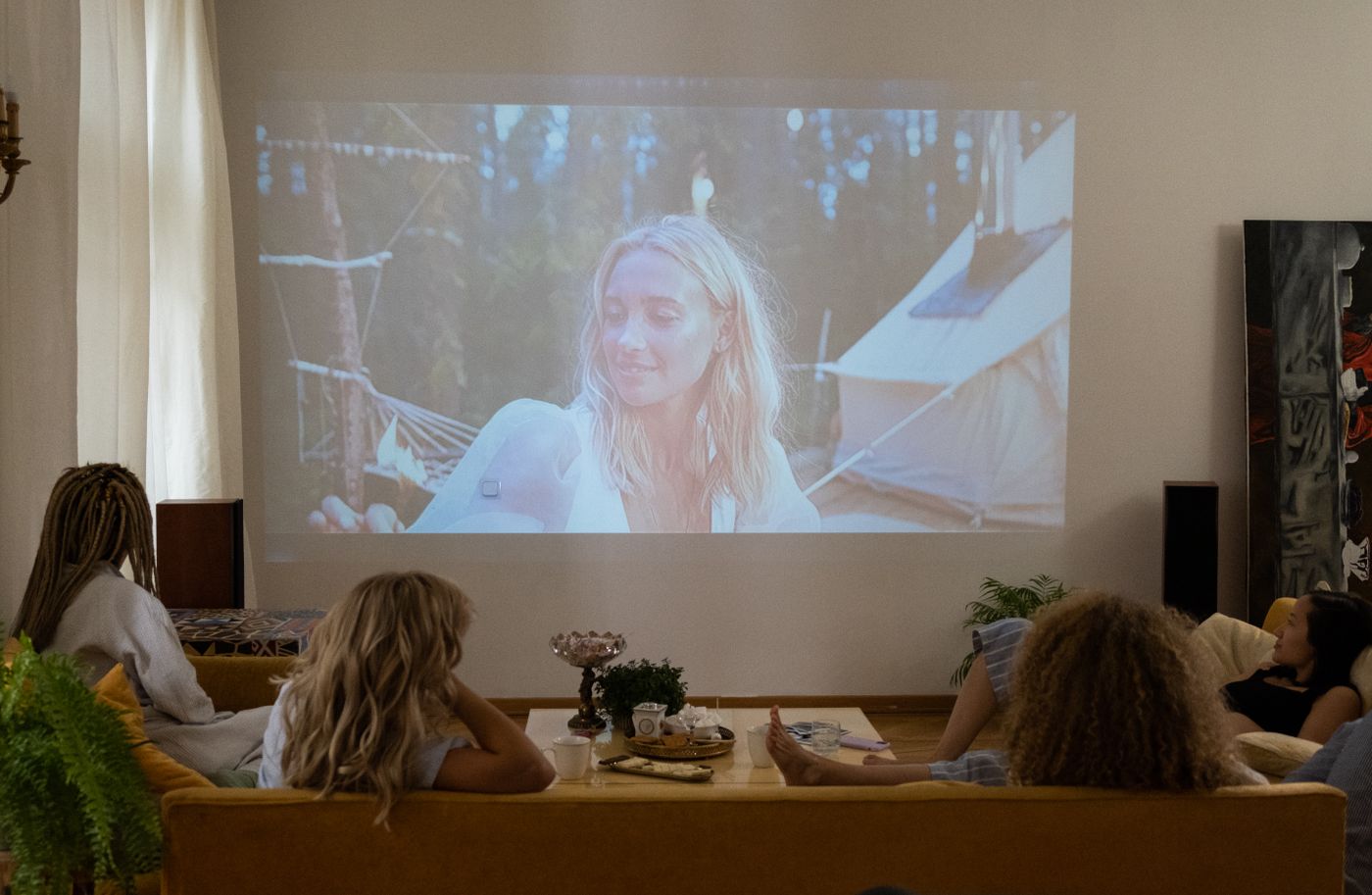
Check that everyone can see without maintaining an awkward position. Floor cushions may suit some guests but not everyone. Leave enough light to move around and keep an easy route to the exit. A completely dark room is not essential for the experience.
Put drinks on stable surfaces away from equipment. If serving food, ask about dietary requirements and choose something that does not need complicated handling in dim light. Follow storage instructions for perishables instead of leaving everything out for the whole film. A clear place for used cups and packaging also reduces accidental spills during a pause.
Leave a small reachable surface for glasses, phones or other personal items. Comfort means more than a cushion; it includes being able to stand without moving everyone else. Avoid automatically giving the last arrival a position with almost no view. If there are not enough usable places, reduce the group or choose a different arrangement.
Agree on a few habits
Ask whether the group wants a break halfway through or continuous viewing. Comments during a film delight some people and distract others, so discuss this before starting. Suggest putting phones away while allowing people to remain reachable when their circumstances require it.
After the credits, let conversation develop without imposing a formal round of analysis. One scene, character or visual detail may be enough to begin. Check for forgotten belongings, then clear cables and food. If repeating the evening, note what made viewing comfortable: readable subtitles, seating positions or a suitable starting time. Those details matter more than making the room look exactly like a cinema.