Make a selection, not a compulsory review
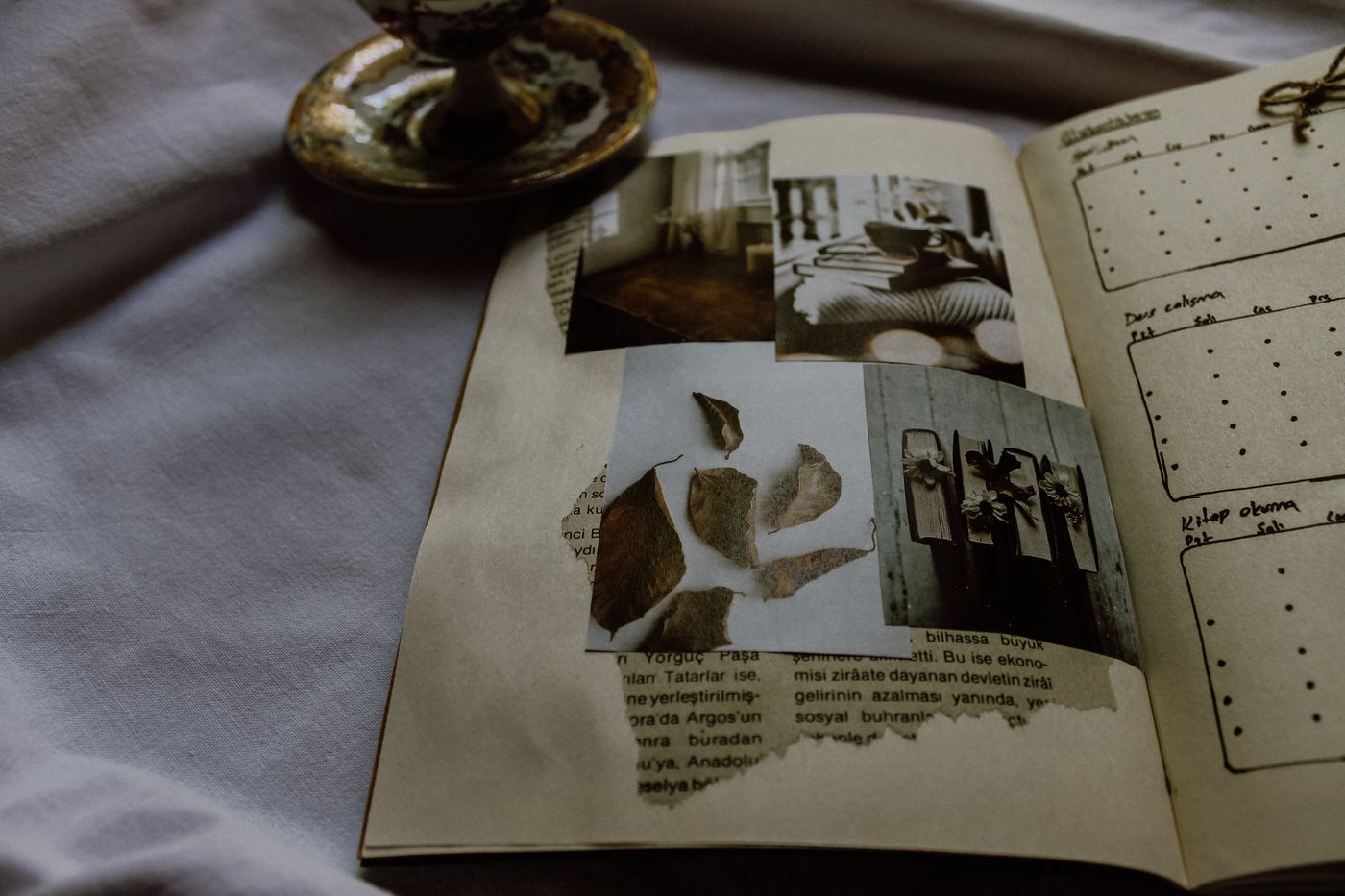
Use a few sheets or a notebook you already have. Set a small limit, perhaps four pages, to avoid creating a large archive. Work on a year, season or period that means something to you. The calendar year is not the only valid way to divide memories.
Gather a few traces first: a photograph, ticket, written phrase or book title. Do not immediately search for the most important moments. Ordinary details may represent a period better than events selected because they look impressive to other people. Keep the gathering stage brief so collecting does not replace making the pages.
Give pages different purposes
One page might describe a familiar place, another a meeting, a third an object used often and a final page an unanswered question. These are possibilities rather than a required format. Choose subjects suited to the traces you have. You do not need equal coverage of every month or a balanced number of happy and difficult memories.
Write what you know and leave gaps where memory is uncertain. A sensitive period can be briefly acknowledged, approached differently or omitted. This notebook is not a therapeutic exercise that must be completed at any cost, nor evidence that you have understood everything that happened. You decide which material belongs in it.
Assemble without permanently attaching everything
Use copies when originals are fragile or important. Consider suitable adhesives for long-term preservation; a pocket or envelope can avoid permanently fixing a document. Receipts and tickets containing personal details should not become accidentally visible.
Add captions explaining why a trace is included. A place name and one sentence about what you did there may be enough. Avoid filling empty areas simply to create dense pages. A nearly blank page with one precise detail can still be finished. Keep dates where known so future reading does not require reconstructing the sequence from scratch.
Choose what remains private
Ask before sharing personal images or accounts involving other people. Keep a private version and show only a selected page if preferred. A handmade notebook can still affect privacy when photographed and published.
Finish by noting one thing you want to keep available: somewhere to revisit, an activity to repeat or someone to contact. It does not need to become a resolution. Store the pages where they can be found and add the date you made them. Later reading need not involve judging whether the next year was better or whether you completed a programme of improvement.