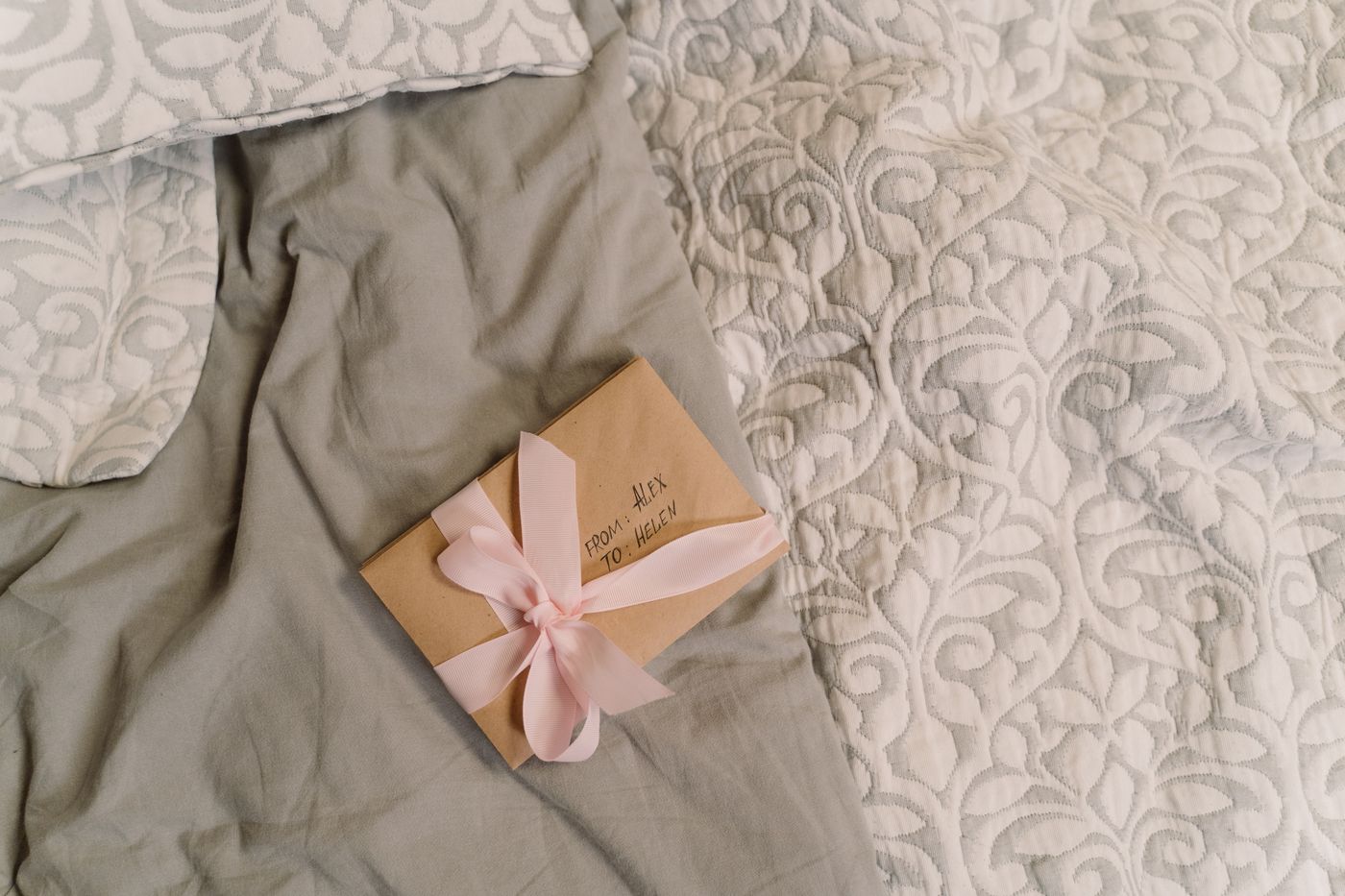
Begin with the actual choice
Ask why you chose this gift for this person. A concrete answer often supplies the first sentence: they mentioned an author, wanted a notebook that fits their bag or shared a walk whose colours the object recalls. A simple choice does not need an invented deeper meaning.
Avoid detailing all the time or money spent searching. The note accompanies the gift rather than asking the recipient to measure your effort. Saying that something reminded you of a shared visit leaves more freedom than emphasising how difficult it was to obtain. The recipient should not need to produce a sufficiently grateful response to balance the story.
Use your own speaking voice
Choose words you might actually say. Start with a name, add two or three sentences and sign. A short message can be warm without becoming ceremonial. When you do not know someone well, refer to the shared context instead of borrowing an intimacy that does not exist.
Read quietly to identify phrases that sound like copied quotations. Replace a general compliment with a specific detail when you have one. If not, a plain wish is preferable to an invented anecdote. You do not need to explain every feature of the object or persuade the recipient that it is the perfect present.
Leave its use open
Avoid emotional instructions such as requiring the gift to remain on display, be worn on a certain day or appear in a photograph sent to you. Mention exchange arrangements or include a separate gift receipt when appropriate. Flexibility does not erase the care involved in choosing.
For an experience gift, state what is included and what still needs arranging. Do not hide an imposed date or additional costs inside a decorative phrase. Put logistics on a second card if necessary so the personal message remains readable and the practical terms remain clear. A gift should not become a surprise obligation through missing information.
Choose a manageable format
Use card or paper thick enough to prevent ink showing through. Test the pen on a scrap and let it dry before closing the envelope. Aim for legibility rather than unfamiliar calligraphy. A small mistake can be corrected neatly without automatically restarting the whole text.
For a group gift, decide who signs and check names before giving it. Do not publish the message without permission, particularly when it contains a private reference. A card may be kept for years, but it may also be read, stored or recycled. The gesture remains meaningful without requiring a particular place in the recipient's home or memory.