Sort one family at a time
Begin with a category such as jumpers or beach clothes. Take the whole group out and distinguish what will genuinely be useful next season from what no longer suits you. An uncomfortable garment will not improve after six months in a box. Make separate decisions to keep, repair, or pass on and recycle according to condition and local options.
Clean items according to their labels and let them dry completely before packing. Added fragrance is not a substitute for this preparation. Empty pockets, secure parts that might catch other fabrics and identify small repairs. Complete quick repairs before packing; otherwise keep the garment in an identified repair area rather than a box ready to close.
Fit the container to the cupboard
Measure the shelf and the route into it. A large box may fit but become impossible to remove when full. Several smaller containers can be easier to handle. Choose materials suited to the storage location and textiles; avoid damp places and follow specific recommendations for delicate pieces.
Do not compress every garment in the same way. Soft knitwear, a structured jacket and a delicate accessory need different treatment. Vacuum bags can reduce the volume of some textiles but are not a universal answer. Follow care advice and allow space for items that might become distorted. Put heavier boxes where they can be lifted comfortably rather than overhead.
Keep a small transition selection accessible between seasons. Packing every jumper on the first warm day may mean reopening several boxes the following week. Choose a few pieces suited to local variations and your habits. This selection does not need to follow a fashion calendar; it depends on what you actually wear and the conditions in your region. Leave these pieces visible so they do not become a second hidden reserve.
In a multi-person household, clearly identify each container's or compartment's owner. Do not mix similar sizes on the assumption that you will recognise them six months later. If clothes are intended for someone else, give them a separate destination with that person's agreement. A box labelled perhaps for someone can easily remain stored for years without a decision, occupying space needed for garments already in use.
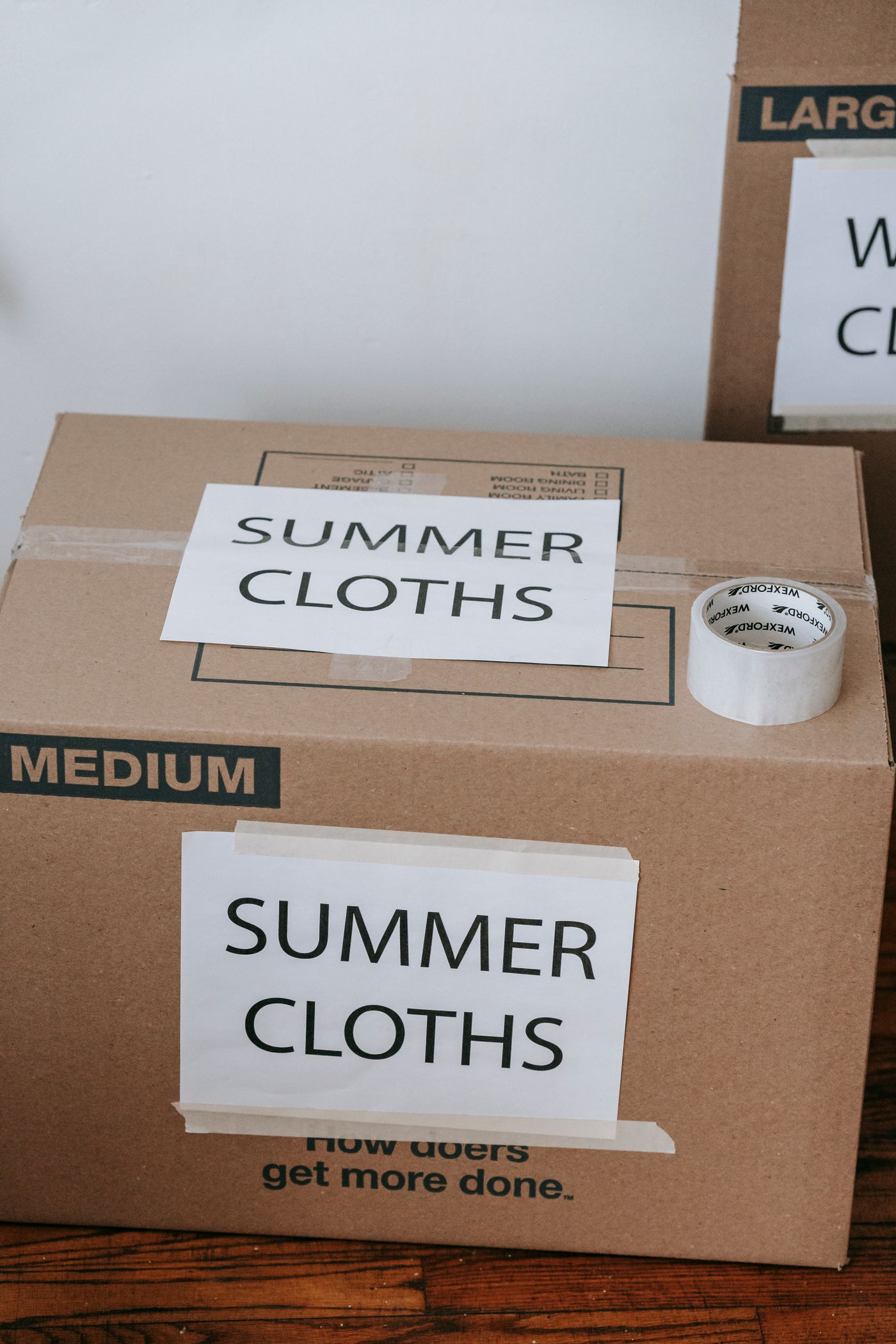
Write for your future self
A label saying winter may be too vague. Try adult jumpers and scarves, or swimwear and hats, identifying the owners where useful. A short list inside the lid can prevent duplicate purchases. Keep it simple: the aim is not to create an inventory that takes longer than putting the clothes away.
At the next seasonal change, open the boxes before shopping. Check condition, sizes and what is actually missing. If a box stays closed for two seasons, consider why you are keeping its contents. A reserve makes sense when it answers a probable need, not merely because a spare corner remains above the wardrobe.