Measure it open
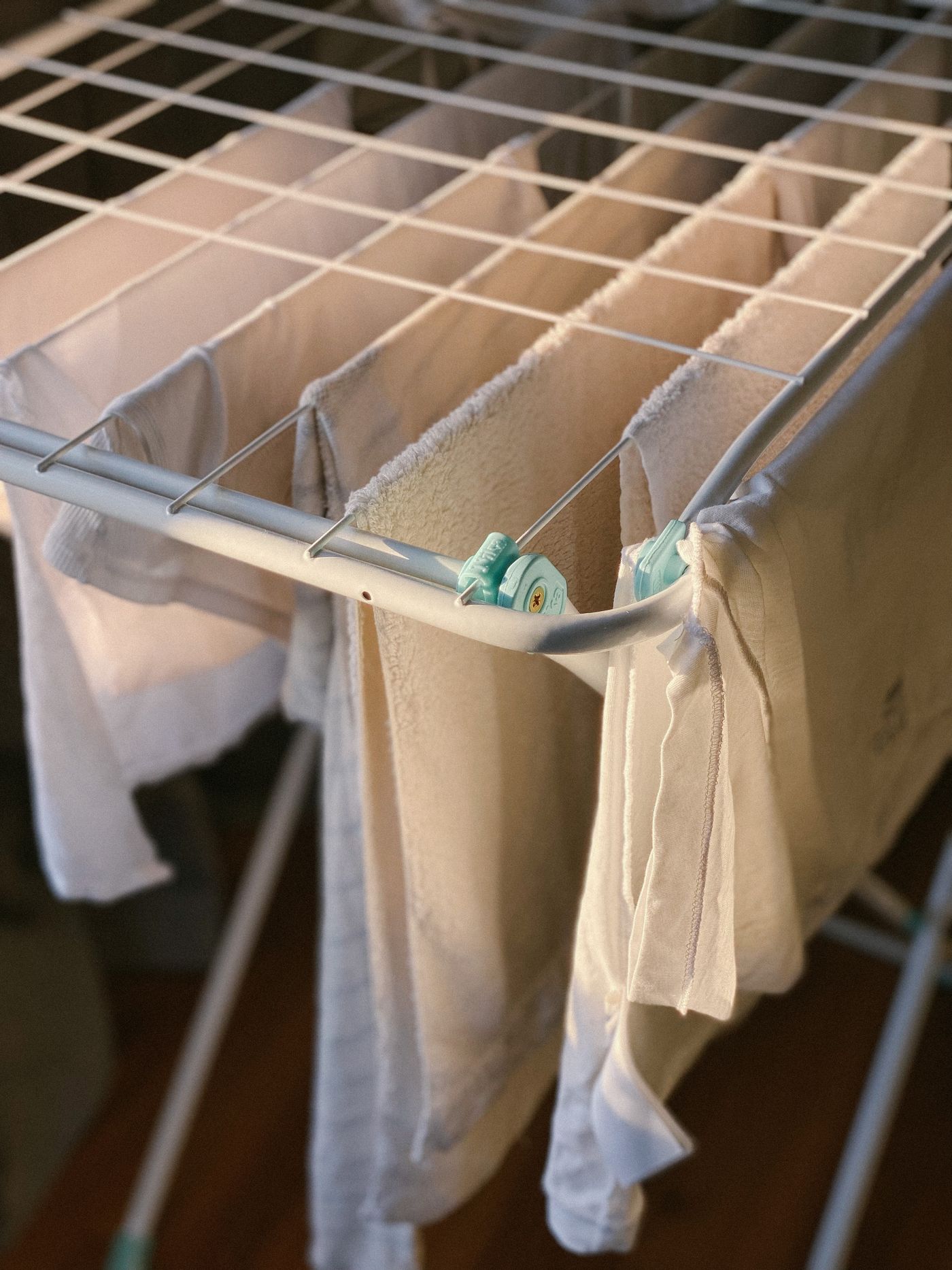
Measure a drying rack unfolded and with laundry on it. Sleeves and sheets often extend beyond the frame and may touch a wall or obstruct the route through the room. Choose somewhere air can circulate and doors remain usable. Do not put laundry directly on a radiator or appliance that is not designed for that purpose.
Consider the moisture released during drying. Ventilate the home or use its ventilation system as intended, keeping vents clear. Frequent condensation deserves attention rather than simply rearranging the furniture. Guidance appropriate to your home takes priority over finding an inconspicuous spot. A closed cupboard is not an alternative drying room just because it hides the rack.
Match washing to the space available
Before running two loads in succession, check that you can spread their contents properly. Crowded laundry dries poorly and makes moving around difficult. Spacing out washes may work better than buying a second large rack. Select spinning settings according to care labels and the machine's capabilities rather than assuming all textiles suit one programme.
Shake out and unfold each item before hanging it. Leave room between layers and position garments according to their care instructions. Some knitwear needs to dry flat; hanging it by the shoulders can distort it. A flat drying support also needs a planned surface, not a position on top of already damp laundry.
Plan for the large pieces
A duvet cover occupies space differently from several T-shirts. Before washing bedding, work out how it can open out without forming a thick bundle or trailing on the floor. Follow the rack's instructions and the textile's care label. If your arrangement cannot accommodate it, spreading large items across different days or using a suitable drying option elsewhere is more realistic than overloading the support.
Keep pegs and small accessories together within reach of the drying area. Check that a peg does not mark delicate fabric and that smaller items cannot fall between the bars. A bag for clean laundry can wait nearby, but it should not become a place to compress garments that are still damp.
Finally, consider when the room needs to serve another purpose: hosting a visitor, working or going to bed. Choosing a washing time with that moment in mind is better than urgently relocating a loaded rack. The schedule need not be rigid; it simply needs to recognise that washing, drying and putting away are three separate stages, each requiring space. If an arrangement repeatedly conflicts with the same household activity, change the timing or location rather than relying on everyone to step around it.
Get the room back
Remove dry pieces as they finish if this opens space around the remaining laundry, and put everything away only when fully dry. Do not fold a still-damp towel just to save time. Once the load is finished, fold the rack and store it where it will not block an exit or fall over.
If the rack remains permanently open, investigate why: washing frequency, excessive volume, inadequate ventilation or clean laundry that has not been put away. Each cause needs a different response. A realistic system allows the drying time required instead of treating it as an afterthought to squeeze into an already full room.