A working surface, not a display
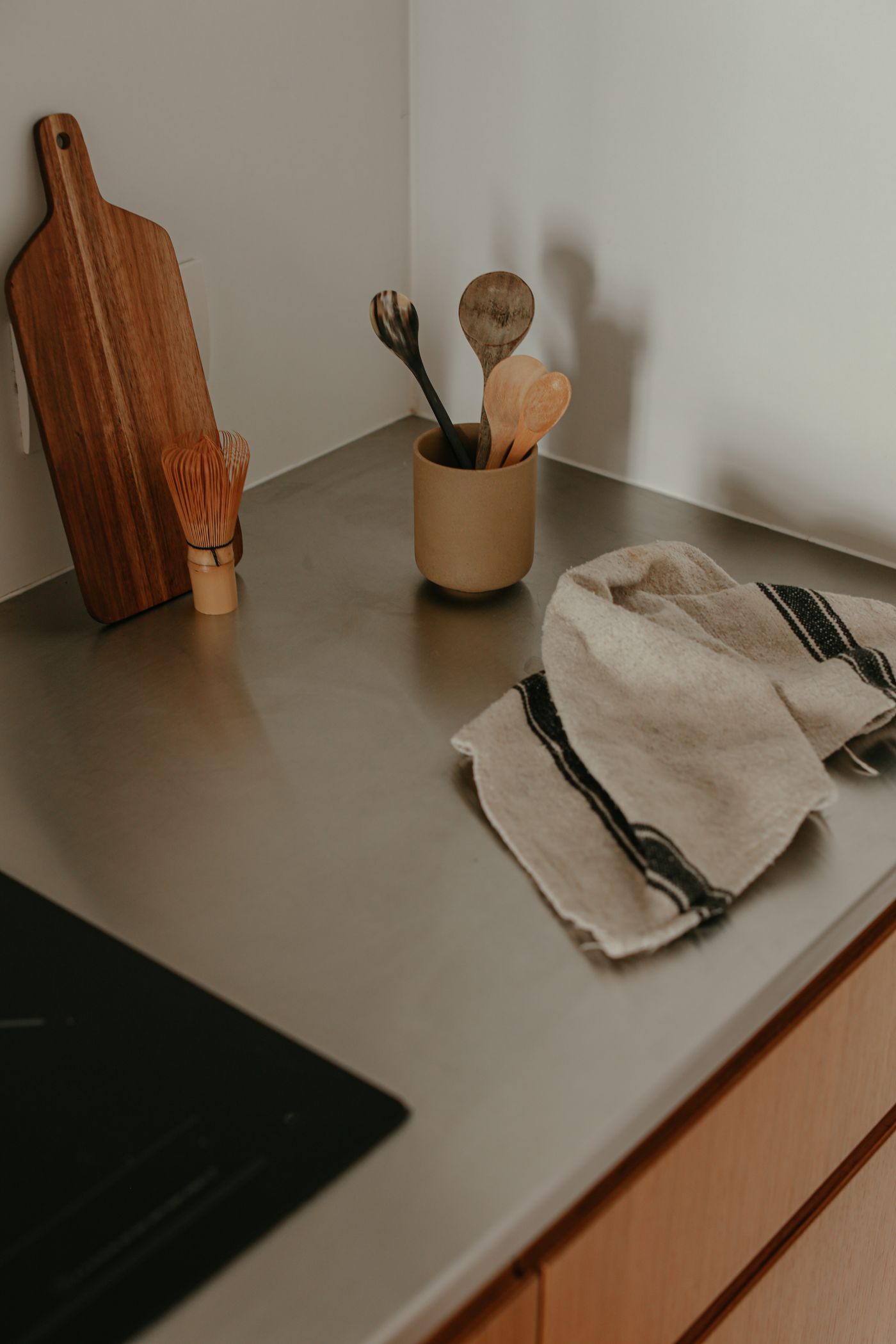
Choose the area where you actually prepare meals. It should hold a chopping board, bowl and current ingredients without requiring you to move a row of objects. Begin with this stretch rather than the whole kitchen. Transfer its contents to a table and wipe the surface: you will see its actual size and the restrictions created by sockets, corners and the sink.
Sort the removed objects by how often you use them. A daily kettle deserves a different position from a waffle maker used three times a year. The latter can move to accessible storage without remaining plugged in or occupying the worktop. However, never store an appliance while it is still hot or damp; follow its instructions. A less crowded kitchen should not make every meal take longer to prepare.
Trace the route of one meal
Take a simple example such as making a salad. Where do you wash vegetables, chop them and put the peelings? Bring the necessary tools closer to these movements while maintaining separation between ready-to-eat food and raw ingredients that require particular handling precautions. Decoration should not dictate the route food takes through the kitchen.
Keep utensils in a nearby drawer or an easily cleaned container instead of gathering them all beside the hob. Maintain the recommended clearances around appliances and heat sources. Oils, paper and textiles should not accumulate in a hot area. Cables must not cross the sink or the space where you move a chopping board.
If the post always arrives in the kitchen, give it another clearly visible landing place. Moving it to the opposite corner of the same worktop only shifts the problem. A small basket elsewhere can hold pending documents, with a time set aside to deal with them. The kitchen does not need to store every object that lacks another home.
Keep a useful empty space
After eating, return tools to their places and clean in ways suited to the surfaces and products involved. A tray beneath two bottles may make this easier; five decorative trays may simply create more surfaces to wipe. Buy an organiser only when a specific group of objects genuinely needs one.
You might photograph the cleared counter as a reference, then use the kitchen normally for a week. If you continually bring out one appliance, give it a permanent position. If an object remains untouched, remove it from the active area. Empty space is not a fault waiting to be filled: it lets you roll pastry, put down a dish or prepare two things at once without beginning by tidying.