Choose an authorised path
Find a route open to the public and check local access information. Areas may close for forestry work, hunting, fire risk or wildlife protection. Follow signs on the ground even if an app shows a path. A short, familiar route works well for a first observation walk because you can pay attention to the surroundings rather than concentrating on navigation.
Wear footwear suited to the ground and prepare for the forecast. Keep the route and return time in mind, especially when daylight ends early. Do not assume mobile reception will be available everywhere. With children, agree a clear rule about staying together and remaining on the path.
Look at three different heights
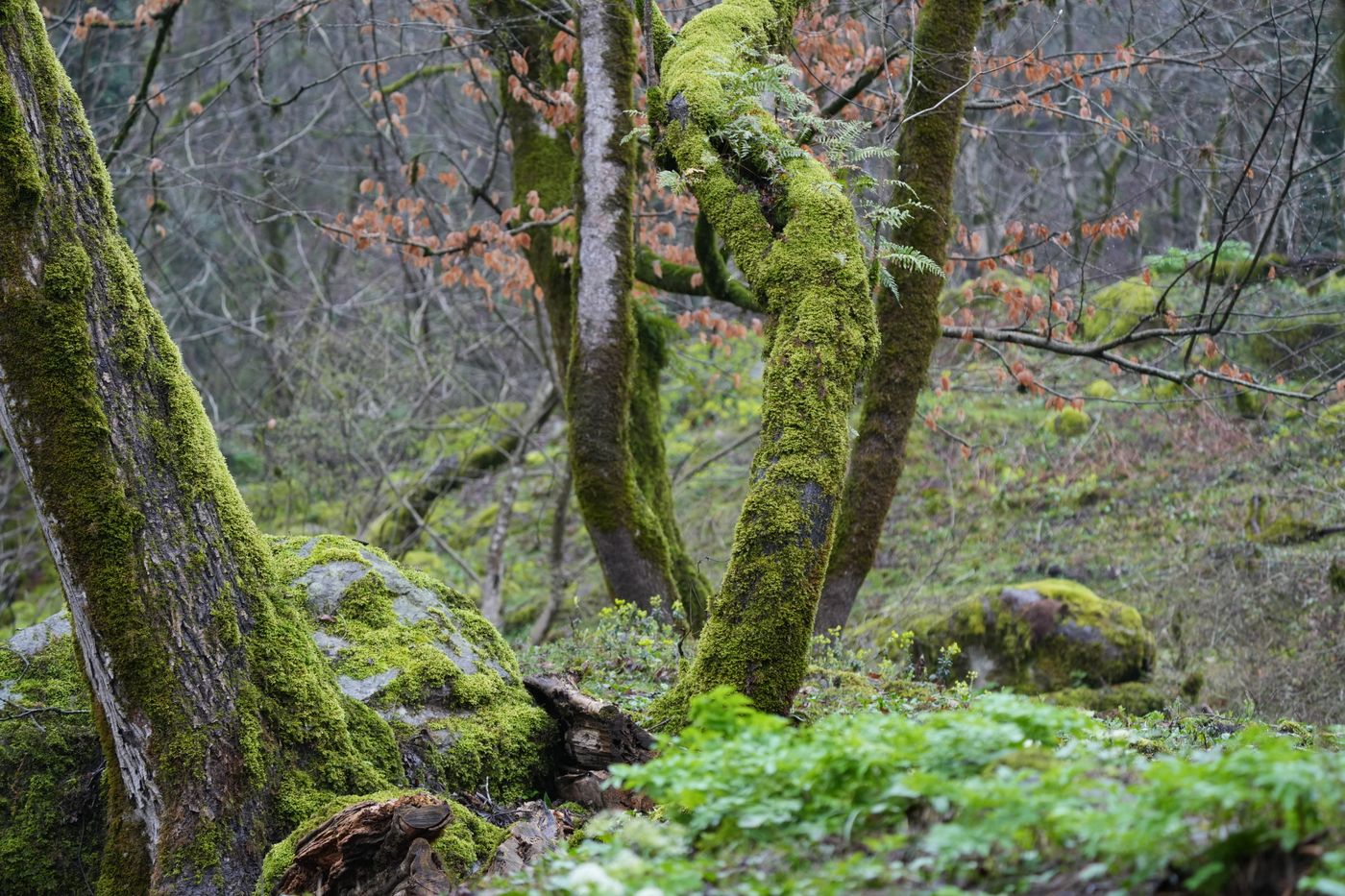
Begin at ground level without lifting branches or turning over stones. Notice differences between fallen leaves, visible moss and bare soil. Then look at trunks: smooth or cracked bark, low branches and old cutting marks. Finally, examine the canopy and the gaps through which light reaches the ground.
Divide a notebook page into three small spaces, one for each height. Draw broad shapes or describe textures in your own words. You do not need to identify every species to notice a difference. When photographing a detail for later research, record its surroundings too rather than keeping only an isolated close-up. Context can be important when comparing the image with a reference book.
Observation is not collection
Leave fungi, feathers, dead wood and plants in place. Do not taste anything or touch an unfamiliar species to test its texture. Fallen wood and leaves are part of the habitat even when they look discarded. Avoid recorded calls intended to attract birds: it is possible to observe without provoking a response.
Pause quietly at a distance from animals and move on if your presence seems to disturb them. Afterwards, check clothing in line with local tick precautions and clean muddy equipment. Choose one observation to explore through a specialist resource or book. A precise question, such as the difference between two kinds of bark, is more useful than a long list of uncertain names.
Describe one place on two dates
Choose a public reference easy to find again, such as a path junction, without marking a tree or moving a stone. Draw or photograph the view from the path and note the date, light and ground condition. A later visit can reveal changes in leaves, shadows or undergrowth density. Returning at exactly the same time is unnecessary.
Be cautious about interpretation. A visible difference between two visits does not establish its cause. You can record fewer leaves without diagnosing disease or a particular climate effect. If something interests you, seek reliable local information or ask an appropriate organisation. Personal observation becomes more useful when it separates what is visible from what cannot be established. Keep both records rather than replacing the earlier one with a cleaner drawing.