Choose a readable texture
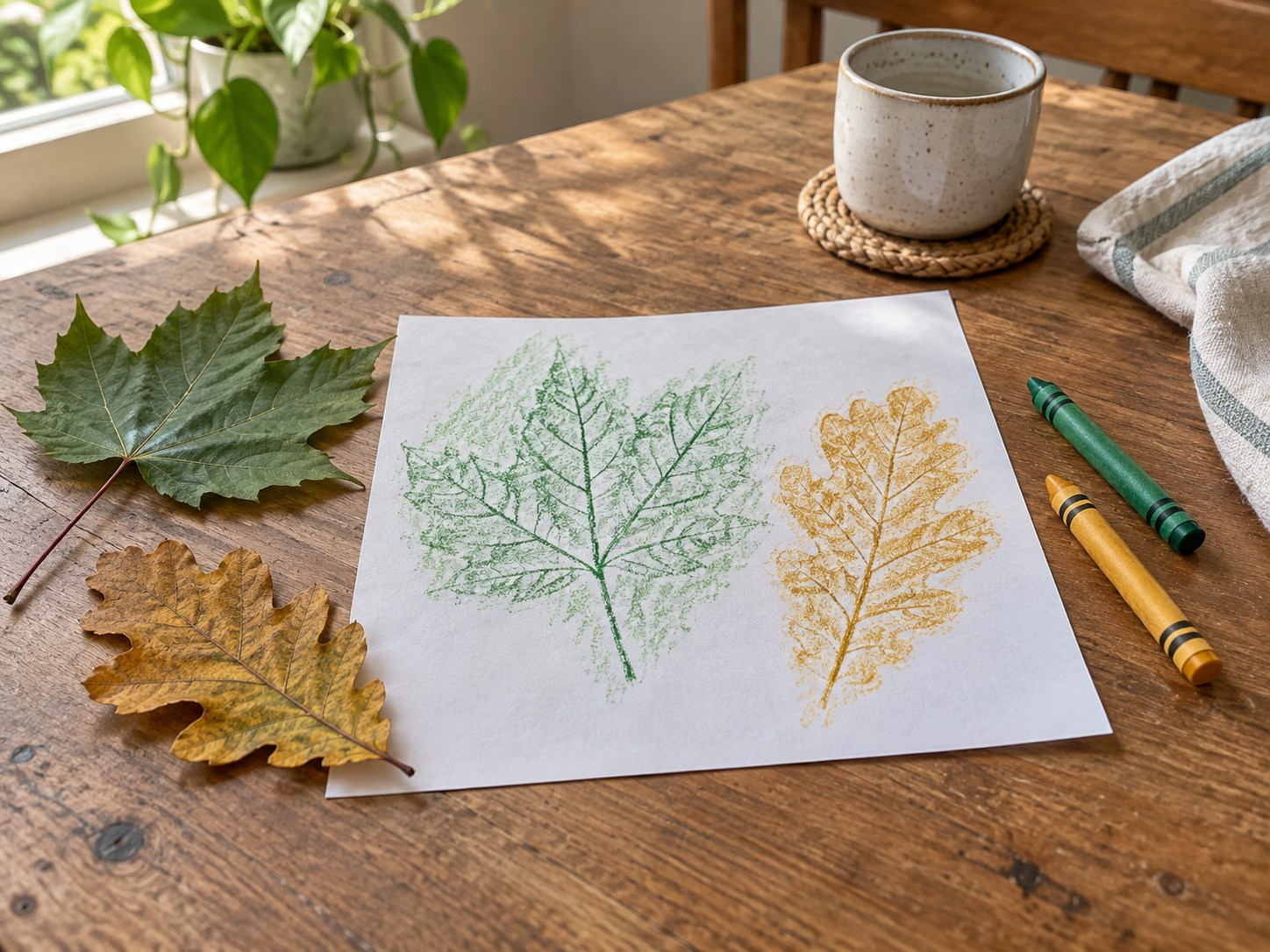
Gather a few fallen leaves where collection is permitted, without damaging plants. Avoid unknown or irritating species and wash your hands after handling them. Select reasonably flat leaves with noticeable veins on the back. A very dry leaf may crumble, while a wet one can stain paper.
Prepare a protected table, fairly thin but strong paper and a wax crayon suited to the user. Thick paper conceals relief. Begin with one leaf rather than a complete arrangement. Put it beneath the paper with its raised veins facing upwards, then hold the layers gently so they do not slide.
Find the pressure
Use the side of the crayon and pass lightly over the area. The first lines should appear without the whole sheet becoming covered in colour. Too much pressure hides detail; if the mark is faint, add another pass instead of immediately pushing hard. Test a corner to find the movement that works.
Work from the centre towards the edges while keeping the leaf still. You need not colour every part of its surface: a few veins may be enough to suggest its shape. Change colour for a second leaf, moving it beneath a clear area. Overlaps can be interesting, but they are easier to control after trying two separate rubbings.
If the leaf slides, do not compensate by pressing much harder with the crayon. Secure the paper appropriately or reduce its size so it is easier to hold. Another person can help retain the corners where useful. The aim is to control the layers, not force the texture through paper that is too thick. Check that the supporting surface itself is not adding a competing texture to the rubbing.
One leaf allows several comparable trials. Use slightly different paper or change only the pressure, then place the results side by side. This shows which variable makes the veins clearer. Changing the plant, paper and crayon simultaneously makes that observation harder, even if the outcomes remain decorative. Mark each trial with a few words so you can remember which combination you preferred for a later card or notebook cover.
Compare the marks with the original leaves. Which veins showed most strongly? Which outline remained subtle? You can add a date or location without naming the species if you are unsure. This observation is more useful than a guessed botanical label. Try the same leaf with lighter pressure to see whether more detail emerges.
Turn a successful rubbing into a card or notebook cover, or keep several trials on one sheet. Put crayons away and remove plant material after the session. Do not leave damp leaves between book pages. Another time, test a different non-fragile texture, always with the necessary permission and without putting the crayon directly onto the object itself.