Measure the contents
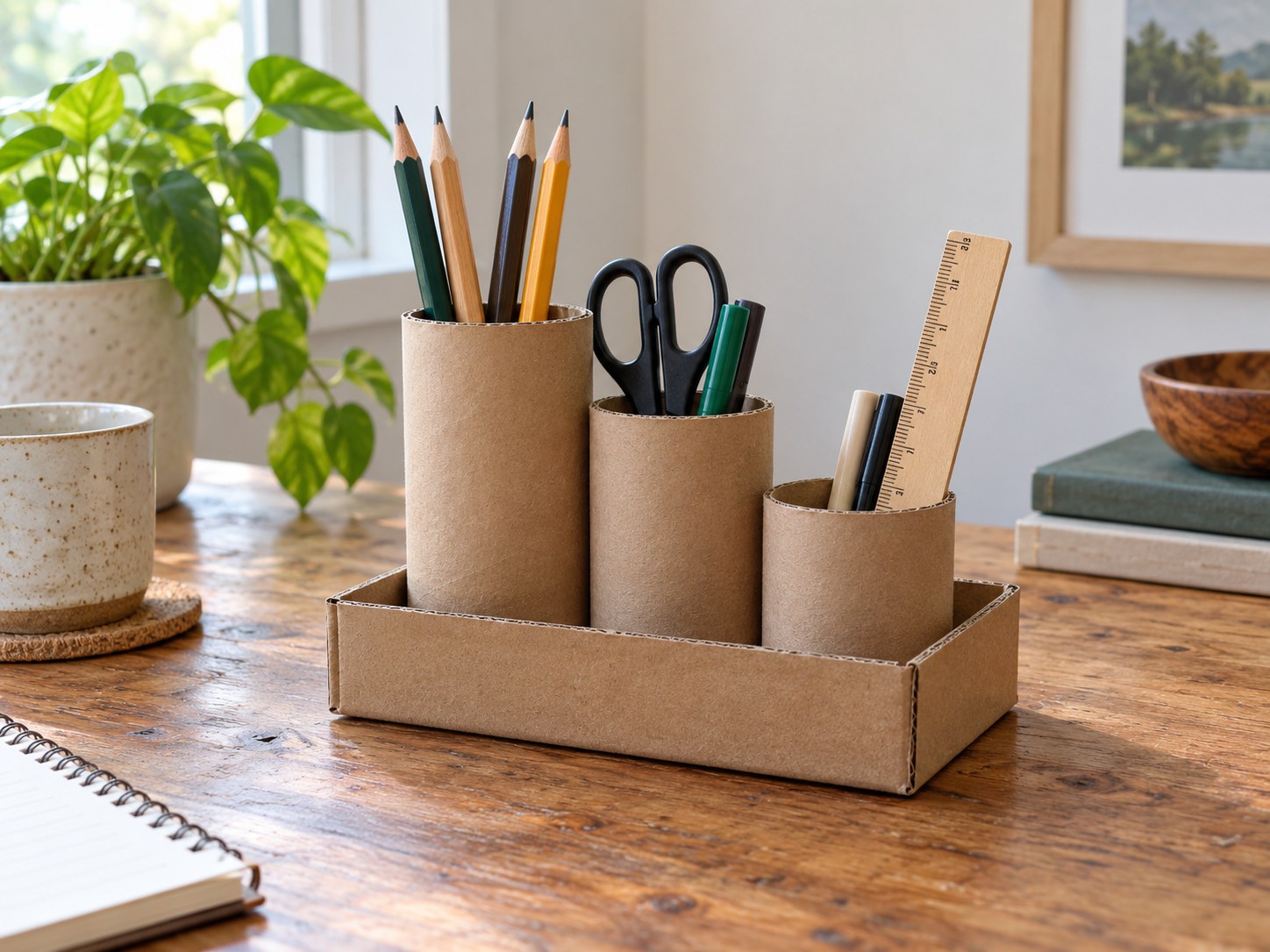
Gather what should remain on the desk: a few pens, cards, a small ruler or notes. Remove spare supplies that can stay in a drawer. A compact organiser works best when it answers a specific collection of objects. Measure the longest pieces and decide whether they should stand up or lie flat.
Choose clean, dry, sufficiently rigid cardboard without food residue. Existing small boxes can become compartments, avoiding construction from scratch. Check their stability when filled. A tall narrow container may topple with a pair of scissors; storage needs to suit weight as well as the width of its contents.
Arrange before attaching
Place compartments on a cardboard base and try several layouts before gluing. Keep lower pieces at the front and taller ones behind if the organiser will stand against a wall. If used in the middle of a table, consider access from every side. Leave enough room to take a pen without catching neighbouring objects.
Cut only what is necessary, using appropriate equipment and a protective work surface. For children, favour ready-formed boxes and suitable scissors with the assistance required. A craft knife is not essential for a simple version. Do not turn a difficult operation into a test of precision when another container could avoid cutting altogether.
Strengthen the working edges
Use compatible adhesive and respect its setting time. Hold pieces securely while drying instead of filling them immediately. Frequently handled edges can be covered with suitable paper, but avoid bulky layers that narrow the openings. Test finishes on a scrap: some adhesives warp thin papers.
A shared base can prevent compartments spreading apart, but it cannot correct cardboard that is too flexible. If the structure distorts under its load, reduce the contents or choose a more suitable base. The point is not to conceal weakness beneath multiple decorative layers. Test with the actual intended objects rather than an empty container that naturally appears stable.
Once dry, fill it gradually and check stability. Store pointed tools safely, out of reach of children who should not access them. Cardboard suits dry indoor use; it should not hold a glass of water or stand beside a wet area.
After a week, remove unused compartments or change their purpose. A small label can help when several people use the organiser. When the cardboard wears out, separate what can be dismantled and sort it according to the materials and local guidance. A reuse project remains useful when it can be maintained, adapted and eventually replaced without accumulating fragile pieces. Keep measurements only if you plan to repeat a successful arrangement.